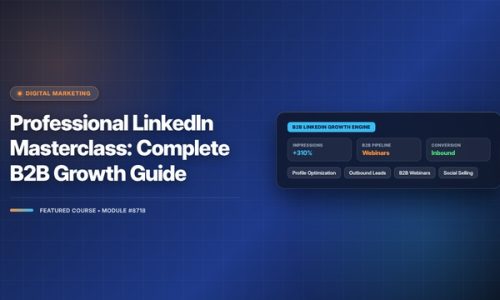
When it comes to LinkedIn analytics, only a handful of metrics really matter: impressions, video views, clicks, CTR, likes, comments, shares, follows, engagement, total followers, organic followers, sponsored followers, demographics, page views, and unique visitors. What I actually watch is impressions, video views, CTR, clicks, comments, and my total follower count. There are plenty of metrics out there — you can track the ones I focus on or go through all of them. So what do you do with an impression? You can build connections, invite them to join your group or community, collaborate, or even offer a product demo.
You can work on a project together and share experiences. From a sales angle, webinars are a perfect tool for nurturing B2B leads and customers. The countdown timer alone brings in roughly half your sales, so don’t skip it. With your webinar, you can adjust the timeline — you don’t have to stick to the exact three-day gaps I use. Lay out your unique selling proposition and outline the three most valuable things attendees will learn.
Include case studies, testimonials, feature-benefit points, calls to action, and of course a Q&A at the end — because Q&A reveals what objections people have. B2B webinars are a great way to nurture leads. You don’t always have to sell. You can nurture a list of current or past customers there, giving yourself the chance to connect, inform, and educate. You can also run time-limited webinars to create urgency, assuming it won’t be available forever.
Add a catchy headline so people want to sign up and actually attend. Send the link to every contact who might be interested — share it with them so you get more and more people on the webinar, and once they’ve watched, connect with them. Make sure you’re connected so you can partner, potentially sell to them, and follow up afterward. Keep your webinar running; there’s no reason to stop.
There’s no single right or wrong way. Sometimes you run multiple channels and angles — I love running paid ads, hosting webinars, and partnering strategically with others. I’m not necessarily hunting for partners on LinkedIn to start a new company, but the possibilities are wide open. So what does it take to get the most out of LinkedIn? First, optimize your profile — we covered that in one of the earliest lessons.
By building the right habits, sticking with it, not giving up, asking for recommendations and endorsements, talking to new people every day, participating in groups, and keeping your profile current, you stack the odds of success in your favor. And of course, being prepared matters enormously too.
When you make those connections, if you’re not prepared, you won’t close those deals. That’s why preparation is so important — especially when your sales cycle runs 90 to 120 days, as it does at many B2B companies. If you’re unprepared, you lose the deal, and those 90 to 120 days go to waste. Sometimes people decide they don’t want to work with you but still burn your time across multiple follow-up calls. I also want you to think like a builder.
Don’t see your LinkedIn profile as something you simply have to maintain. Treat it as an asset you want to grow, scale, and keep leveraging for all it’s worth. Build both long- and short-term strategies. It’s not a choice between being short-sighted or long-sighted — you can run strategies that work well in the short run and the long run without them hurting each other.
You don’t have to sacrifice short-term elements to go long. Do both at once. Think about the most valuable people out there.
They got where they are because of their network, so be sure you’re on LinkedIn and using it — because that network is priceless.
Curriculum
- 1 Section
- 6 Lessons
- 6 Weeks
- Professional LinkedIn Masterclass: Complete B2B Growth Guide6
- 1.1Advanced LinkedIn Tactics: Turning Connections into Leads and Customers – FREE Class6 Minutes
- 1.2Building the Perfect LinkedIn Profile – Module 1, Lesson 2 – LinkedIn Masterclass10 Minutes
- 1.3Landing B2B Leads and Clients on LinkedIn – Module 1, Lesson 3 – LinkedIn Masterclass8 Minutes
- 1.4Using LinkedIn to Close Deals and Drive Sales – Module 2, Lesson 1 – LinkedIn Masterclass11 Minutes
- 1.5Marketing on LinkedIn – Module 2, Lesson 2 – LinkedIn Masterclass
- 1.6Advanced LinkedIn Tactics – Module 2, Lesson 3 – LinkedIn Masterclass9 Minutes
Instructor